
Many people use the terms life insurance and term insurance interchangeably, but they are not the same. Term insurance is actually a type of life insurance that focuses purely on providing financial protection, while many other life insurance plans combine insurance with savings or investment features.
If you’re buying insurance for the first time, understanding the difference can help you choose a policy that matches your financial goals. Some people want maximum life cover at an affordable premium, while others prefer a plan that also offers maturity or savings benefits.
This guide compares life insurance and term insurance in detail, including their features, benefits, costs, and which option may be suitable for different situations.
Quick Comparison
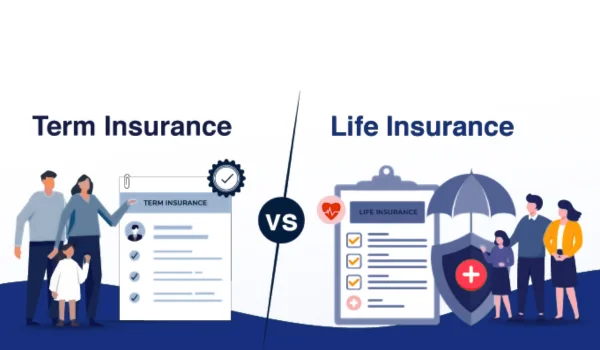
| Feature | Term Insurance | Traditional Life Insurance |
| Purpose | Pure Financial Protection | Protection + Savings/Investment (Depending on Plan) |
| Premium | Generally Lower | Usually Higher |
| Life Cover | Higher for the Same Premium | Usually Lower for the Same Premium |
| Maturity Benefit | Usually No* | Often Available (Depends on Plan) |
| Investment Component | No | May Include Savings or Investment |
| Best For | Income Protection | Long-Term Savings + Insurance |
*Standard term insurance plans generally do not offer a maturity benefit. Some insurers offer Return of Premium (ROP) variants subject to policy terms.
What is Life Insurance?
Life insurance is a broad category of insurance products that provide financial protection to your family if you pass away during the policy term, subject to the policy conditions.
Depending on the type of life insurance plan, it may also include:
- Savings
- Investment
- Wealth creation
- Guaranteed benefits
- Maturity benefits
Examples of life insurance products include:
- Term Insurance
- Endowment Plans
- Money Back Plans
- Unit Linked Insurance Plans (ULIPs)
- Whole Life Insurance Plans
What is Term Insurance?
Term insurance is the simplest form of life insurance.
It provides a death benefit to your nominee if you die during the policy term, provided all policy conditions are met.
A standard term insurance policy:
- Focuses purely on life cover.
- Does not build savings or investment value.
- Usually offers high coverage at a relatively low premium.
Key Differences Between Life Insurance and Term Insurance
- Purpose
Term Insurance
Designed primarily to provide financial security for your dependents in the event of your death during the policy term.
Traditional Life Insurance
Combines life insurance with savings or investment features, depending on the specific product.
- Premium
Term insurance premiums are generally much lower because the policy focuses only on providing life cover.
Traditional life insurance plans usually have higher premiums due to the inclusion of savings or investment components.
- Coverage
For the same premium, term insurance often provides significantly higher life cover than traditional life insurance plans.
Example:
- ₹1 Crore cover through a term plan may cost substantially less than a savings-oriented life insurance plan with a similar sum assured.
Actual premiums vary based on age, health, lifestyle, and insurer.
- Maturity Benefit
Term Insurance
Standard term insurance plans generally do not pay a maturity benefit if the policyholder survives the policy term.
Some insurers offer Return of Premium (ROP) variants that refund eligible premiums, subject to policy terms.
Traditional Life Insurance
Many plans provide a maturity benefit if the policyholder survives until the end of the policy term, depending on the plan type.
- Investment
Term insurance does not include an investment component.
Many traditional life insurance products include savings or investment features, though returns and risks vary depending on the product.
Advantages of Term Insurance
- Affordable premiums.
- High life cover.
- Simple and easy to understand.
- Suitable for protecting your family’s income.
- Optional riders such as critical illness or accidental death benefit may be available.
Advantages of Traditional Life Insurance
- May provide maturity benefits.
- Can support long-term savings goals.
- Some plans offer guaranteed benefits.
- Certain products may help with disciplined savings.
Who Should Choose Term Insurance?
Term insurance may be suitable if you:
- Are the primary earning member of your family.
- Have dependents.
- Have outstanding loans such as a home loan.
- Want maximum life cover at a relatively affordable premium.
- Prefer to keep insurance and investments separate.
Who Should Consider Traditional Life Insurance?
A traditional life insurance plan may suit those who:
- Want insurance along with savings.
- Prefer guaranteed or structured benefits, depending on the plan.
- Are comfortable paying higher premiums.
- Have long-term financial goals that align with the policy features.
Factors to Consider Before Buying
Before choosing a policy, evaluate:
- Your financial goals.
- Number of dependents.
- Existing loans.
- Annual income.
- Budget for premiums.
- Desired coverage amount.
- Whether you need only insurance or insurance plus savings.
Riders You Can Add
Many insurers offer optional riders such as:
- Critical Illness Rider
- Accidental Death Benefit Rider
- Waiver of Premium Rider
- Permanent Disability Rider
- Terminal Illness Benefit (where available)
These riders increase the premium but may enhance your coverage.
Common Mistakes to Avoid
- Buying a policy without understanding its features.
- Choosing a plan based only on the premium.
- Purchasing insufficient life cover.
- Hiding medical conditions during the application.
- Confusing investment returns with insurance protection.
- Not reviewing your coverage after major life events.
Term Insurance vs Endowment Plan
| Term Insurance | Endowment Plan |
| Pure insurance | Insurance + Savings |
| Lower premium | Higher premium |
| Higher life cover | Lower life cover for the same premium |
| Usually no maturity benefit | Maturity benefit available, subject to policy terms |
Tips Before Buying
- Compare policies from multiple insurers.
- Choose an adequate sum assured.
- Read the policy wording carefully.
- Review exclusions and waiting periods (if applicable).
- Buy at a younger age for potentially lower premiums.
- Keep nominee details updated.
Frequently Asked Questions (FAQs)
Is term insurance the same as life insurance?
No. Term insurance is a type of life insurance. Life insurance is a broader category that includes term plans as well as savings- and investment-linked insurance products.
Which is better: Life insurance or term insurance?
It depends on your goals. If you want maximum financial protection for your family at a relatively low cost, term insurance is often a suitable choice. If you also want a savings or investment component, another type of life insurance may be more appropriate.
Does term insurance provide maturity benefits?
Standard term insurance plans generally do not provide a maturity benefit. Some insurers offer Return of Premium (ROP) variants that refund eligible premiums if specified conditions are met.
Why is term insurance cheaper?
Term insurance focuses solely on life cover and does not usually include savings or investment features, which generally results in lower premiums.
Can I buy both life insurance and term insurance?
Yes. Since term insurance is itself a form of life insurance, you can also hold multiple life insurance policies if they suit your financial needs and you meet the insurers’ eligibility requirements.
Final Thoughts
Choosing between term insurance and traditional life insurance depends on your financial priorities. If your main objective is to provide substantial financial protection for your family at an affordable cost, term insurance is often the most straightforward option. If you prefer a policy that combines insurance with savings or investment features, a traditional life insurance plan may better align with your goals.
Before purchasing any policy, compare insurers, understand the benefits and exclusions, choose an appropriate coverage amount, and ensure the premium fits comfortably within your long-term budget. A well-informed decision today can provide lasting financial security for you and your loved ones.






Leave a Reply