
A cheque bounce case occurs when a cheque issued by a person or business is returned unpaid by the bank due to reasons such as insufficient funds, signature mismatch, account closure, or other banking issues.
In India, cheque dishonour is a serious financial offence primarily governed by Section 138 of the Negotiable Instruments Act, 1881. The law provides a legal mechanism for the cheque holder to recover the amount and take action against the person who issued the cheque.
This guide explains the cheque bounce case process in India, legal notice requirements, time limits, penalties, required documents, and important steps for both complainants and accused persons.
Disclaimer: This article is for educational purposes only and should not be considered legal advice. Cheque bounce cases depend on specific facts, documents, and applicable laws. Consult a qualified lawyer for advice related to your situation.
Quick Overview
| Particular | Details |
| Applicable Law | Section 138, Negotiable Instruments Act, 1881 |
| Main Issue | Cheque Dishonour |
| First Step | Send Legal Demand Notice |
| Notice Period | Within 30 Days of Receiving Dishonour Information |
| Payment Opportunity | 15 Days After Receiving Notice |
| Court Case | Can Be Filed After Failure to Pay |
| Possible Punishment | Fine and/or Imprisonment as Provided by Law |
What is a Cheque Bounce Case?
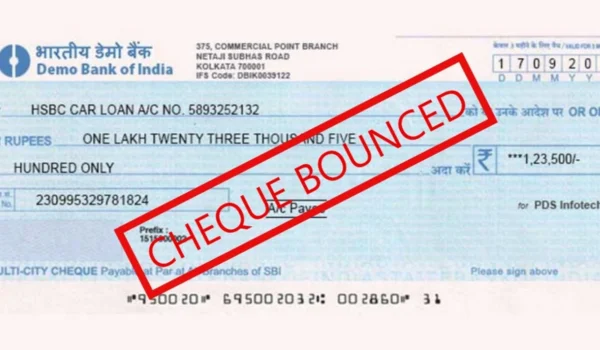
A cheque bounce case arises when a bank refuses to honour a cheque issued by the drawer due to a valid reason.
Common reasons include:
- Insufficient account balance
- Account closure
- Signature mismatch
- Payment stopped by drawer
- Exceeding account arrangements
- Other banking-related issues
When a cheque issued for a legally enforceable debt or liability is dishonoured, the cheque holder may have legal remedies under applicable law.
What is Section 138 of the Negotiable Instruments Act?
Section 138 of the Negotiable Instruments Act, 1881 deals with cheque dishonour for insufficiency of funds or other specified circumstances.
For a case under Section 138, certain legal requirements generally need to be fulfilled, including:
- The cheque should have been issued for a legally enforceable debt or liability.
- The cheque should be presented within the validity period.
- A legal demand notice should be sent within the prescribed time.
- Payment should not be made within the legally provided period after receiving notice.
Cheque Bounce Case Process
Step 1: Cheque Presentation
The cheque holder deposits the cheque with their bank.
The bank processes the cheque and either:
- Clears the payment, or
- Returns it unpaid.
Step 2: Receive Bank Return Memo
If the cheque is dishonoured, the bank provides a cheque return memo stating the reason for rejection.
This document is important evidence in the case.
Step 3: Send Legal Notice
The cheque holder must send a legal demand notice to the cheque issuer within the prescribed period after receiving information about dishonour.
The notice generally demands payment of the cheque amount.
Step 4: Wait for Payment Period
The drawer gets a legally specified period after receiving the notice to make payment.
If payment is made, further legal action may not be required.
Step 5: File Complaint in Court
If payment is not made within the prescribed period, the cheque holder may file a complaint before the appropriate court within the applicable limitation period.
Documents Required for Cheque Bounce Case
Important documents may include:
Cheque Documents
- Original bounced cheque
- Bank return memo
- Cheque deposit receipt
Transaction Proof
- Loan agreement
- Invoice
- Bills
- Payment records
- Written communication
Legal Notice Documents
- Copy of legal notice
- Postal receipt
- Delivery proof
- Reply from opposite party (if any)
Cheque Bounce Legal Notice Format
A cheque bounce legal notice generally includes:
- Date of notice
- Details of cheque
- Date of cheque issuance
- Amount involved
- Date of dishonour
- Bank return reason
- Demand for payment
- Time provided for payment
- Consequences of non-payment
Cheque Bounce Penalty and Punishment
Under Section 138 of the Negotiable Instruments Act, cheque dishonour may attract:
- Imprisonment up to two years, or
- Fine which may extend to twice the cheque amount, or
- Both
The final outcome depends on the facts of the case and court proceedings.
Time Limit in Cheque Bounce Cases
| Action | Time Limit |
| Present cheque before bank | Within validity period |
| Send legal notice | Within prescribed period after receiving dishonour information |
| Payment opportunity after notice | 15 days after receipt of notice |
| File complaint | Within prescribed limitation period after cause of action arises |
Can a Cheque Bounce Case Be Filed Without Legal Notice?
Generally, for proceedings under Section 138 of the Negotiable Instruments Act, sending a valid legal demand notice within the required time is an important mandatory step.
Common Defences in Cheque Bounce Cases
The accused may raise certain defences depending on the facts, such as:
- No legally enforceable debt existed.
- Cheque was not issued voluntarily.
- Cheque was misused.
- Payment was already made.
- Legal requirements were not followed.
The validity of any defence depends on evidence and court assessment.
Cheque Bounce Case Settlement
Many cheque bounce cases are resolved through:
- Payment settlement
- Mediation
- Compromise between parties
Courts may encourage settlement depending on circumstances.
Difference Between Cheque Bounce and Civil Recovery Case
| Cheque Bounce Case | Civil Recovery Case |
| Criminal proceeding under applicable law | Civil remedy for recovery of money |
| Based on cheque dishonour | Based on outstanding dues |
| May involve punishment | Focuses on recovery |
| Requires cheque-related evidence | Requires proof of debt/liability |
Tips for Cheque Issuers
If your cheque has bounced:
- Do not ignore the legal notice.
- Consult a lawyer if you receive court documents.
- Maintain records of transactions.
- Respond within applicable timelines.
- Avoid issuing cheques without sufficient funds.
Tips for Cheque Holders
If your cheque has bounced:
- Preserve the original cheque and bank memo.
- Send notice within the required time.
- Maintain proof of communication.
- Keep transaction documents safely.
- Take legal advice before filing proceedings.
Frequently Asked Questions (FAQs)
What happens after a cheque bounce?
After cheque dishonour, the cheque holder may send a legal demand notice. If payment is not made within the prescribed period, a complaint may be filed before the appropriate court.
How many days are given to pay after cheque bounce notice?
The cheque issuer generally gets 15 days after receiving the legal demand notice to make payment.
Can a person go to jail for cheque bounce?
Yes, cheque dishonour under Section 138 may result in imprisonment, fine, or both as provided by law.
Is cheque bounce a criminal offence in India?
Yes, cheque dishonour covered under Section 138 of the Negotiable Instruments Act is treated as a criminal offence.
Can a cheque bounce case be settled?
Yes, many cheque bounce disputes are resolved through settlement between parties, subject to applicable legal procedures.
Final Thoughts
Cheque bounce cases are an important legal remedy for recovering money when a cheque issued against a valid liability is dishonoured. However, the process involves strict timelines, including sending a legal notice within the prescribed period and filing the complaint within the limitation period.
Whether you are a cheque holder seeking recovery or someone facing a cheque bounce notice, understanding your rights, maintaining proper documents, and taking timely legal action can significantly affect the outcome of the case. For complex matters, professional legal guidance is recommended.




Leave a Reply