
Renovating your home is an exciting opportunity to improve comfort, functionality, and property value. Whether you’re updating a single room or planning a complete home makeover, proper planning can save you time, money, and unnecessary stress.
Many homeowners make costly mistakes by starting renovations without a clear budget, timeline, or contractor agreement. A well-prepared renovation checklist helps you stay organized, avoid delays, and ensure every aspect of the project is covered.
This guide provides a comprehensive home renovation checklist, along with budgeting tips, planning advice, and common mistakes to avoid.
Disclaimer: Renovation costs and timelines vary depending on the size of the project, location, materials, and labour charges.
Quick Overview
| Particular | Details |
| Project Type | Home Renovation |
| Suitable For | Apartments, Villas & Independent Houses |
| Planning Time | 2–8 Weeks (Depending on Project Size) |
| Renovation Duration | Varies by Scope of Work |
| Main Goal | Improve Functionality, Appearance & Property Value |
| Budget | Depends on Renovation Scope |
Why Do You Need a Home Renovation Checklist?
A renovation checklist helps you:
- Stay within budget.
- Avoid unnecessary expenses.
- Track project progress.
- Coordinate with contractors.
- Prevent costly mistakes.
- Ensure nothing important is overlooked.
Proper planning is often the key to a successful renovation.
Complete Home Renovation Checklist
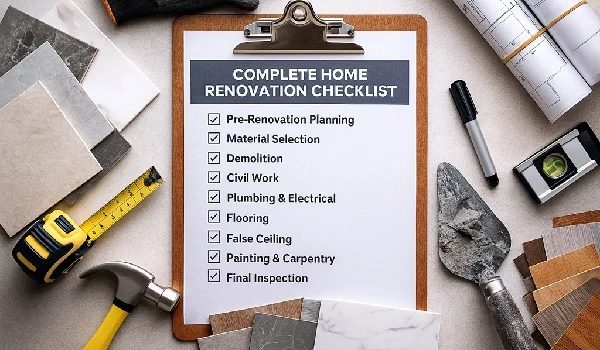 ✅ 1. Define Your Renovation Goals
Start by identifying what you want to achieve.
Ask yourself:
- Are you renovating for personal use?
- Are you preparing the house for resale?
- Do you need more storage?
- Is your focus on aesthetics, functionality, or both?
Having clear goals makes decision-making much easier.
✅ 2. Set a Realistic Budget
Your renovation budget should include:
- Materials
- Labour
- Interior work
- Electrical upgrades
- Plumbing
- Painting
- Furniture (if applicable)
- Appliances
- Permits (if required)
- Emergency contingency (typically 10–15% of the project cost)
A contingency fund can help cover unexpected expenses.
✅ 3. Decide What to Renovate
Prepare a room-by-room list.
For example:
- Living room
- Kitchen
- Bedrooms
- Bathrooms
- Balcony
- Dining area
- Utility area
- Exterior
Prioritize renovations based on necessity and available budget.
✅ 4. Create a Renovation Timeline
Plan the sequence of work, such as:
- Demolition (if required)
- Structural changes
- Plumbing
- Electrical work
- Flooring
- Ceiling work
- Painting
- Carpentry
- Modular kitchen installation
- Final cleaning
A structured timeline helps reduce delays and rework.
✅ 5. Hire the Right Professionals
Depending on the project, you may need:
- Architect
- Interior designer
- Civil contractor
- Electrician
- Plumber
- Carpenter
- Painter
Before hiring:
- Compare quotations.
- Check previous work.
- Verify references.
- Understand warranty and after-service commitments.
✅ 6. Finalize the Design
Prepare a detailed design plan covering:
- Layout
- Colour scheme
- Flooring
- Lighting
- Furniture placement
- Storage solutions
Making design decisions early helps prevent costly mid-project changes.
✅ 7. Select Quality Materials
Choose materials based on durability, maintenance, and budget.
Examples include:
- Floor tiles
- Wooden flooring
- Paint
- Kitchen cabinets
- Countertops
- Bathroom fittings
- Doors
- Windows
Higher-quality materials may reduce maintenance costs over time.
✅ 8. Plan Electrical Work
Review:
- Switch locations
- Additional sockets
- Lighting layout
- Ceiling fan points
- Air-conditioner points
- Internet and TV connections
It’s much easier to make these changes before walls are finished.
✅ 9. Inspect Plumbing
Check the condition of:
- Water pipelines
- Drainage
- Bathroom fittings
- Kitchen plumbing
- Water tank connections
Replacing old plumbing during renovation can help avoid future issues.
✅ 10. Upgrade Lighting
Consider a combination of:
- Ceiling lights
- LED fixtures
- Task lighting
- Decorative lighting
- Outdoor lighting
Good lighting improves both functionality and ambience.
✅ 11. Improve Storage
Plan storage for:
- Kitchen
- Bedrooms
- Bathrooms
- Utility area
- Living room
Built-in storage solutions can maximize available space.
✅ 12. Check Ventilation
Ensure adequate:
- Natural light
- Air circulation
- Exhaust systems
- Kitchen ventilation
Proper ventilation contributes to comfort and helps control moisture.
✅ 13. Review Safety Features
Consider installing or checking:
- Smoke detectors
- Fire extinguishers
- Circuit breakers
- Earth leakage protection
- Anti-slip flooring in wet areas
- Child safety features (if applicable)
Safety should be a priority in every renovation.
✅ 14. Inspect Before Final Payment
Before closing the project:
- Test electrical fittings.
- Check plumbing for leaks.
- Verify paint finish.
- Open and close all doors and windows.
- Inspect flooring.
- Test appliances (if included).
- Confirm all agreed work has been completed.
Address any issues before making the final payment.
Renovation Budget Checklist
| Expense | Included |
| Labour | ✅ |
| Materials | ✅ |
| Tiles | ✅ |
| Paint | ✅ |
| Plumbing | ✅ |
| Electrical | ✅ |
| Furniture | Optional |
| Appliances | Optional |
| Contingency Fund | ✅ |
Tips to Save Money
- Compare multiple contractor quotations.
- Purchase materials during sales or promotions.
- Reuse items that are still in good condition.
- Avoid unnecessary structural changes.
- Stick to your original design plan where possible.
- Allocate funds for unexpected expenses.
Common Renovation Mistakes
- Starting work without a detailed plan.
- Underestimating the budget.
- Choosing the cheapest contractor without checking quality.
- Ignoring electrical and plumbing upgrades.
- Buying materials at the last minute.
- Making frequent design changes during construction.
- Skipping the final inspection.
Home Renovation vs Home Remodeling
| Home Renovation | Home Remodeling |
| Restores or upgrades existing spaces | Changes the layout or structure |
| Usually less expensive | Often more costly |
| Focuses on repairs and improvements | Focuses on redesign and reconfiguration |
| May require fewer approvals | May require additional permissions depending on the work |
Frequently Asked Questions (FAQs)
What should I do before renovating my house?
Start by defining your goals, setting a realistic budget, creating a renovation plan, selecting contractors, and choosing materials before work begins.
How much should I budget for home renovation?
The budget depends on the size of your home, the scope of the renovation, material quality, and labour costs. It’s also wise to keep a contingency reserve of around 10–15% for unexpected expenses.
Which room should I renovate first?
Many homeowners prioritize kitchens and bathrooms because they are frequently used and often have the greatest impact on functionality and property value. However, the right order depends on your needs and budget.
How long does home renovation take?
The duration varies depending on the project’s complexity. Small renovations may take a few weeks, while full-home renovations can take several months.
Is home renovation worth the investment?
A well-planned renovation can improve comfort, functionality, energy efficiency, and, in many cases, increase the property’s resale value.
Final Thoughts
A successful home renovation begins long before construction starts. Careful planning, a realistic budget, quality materials, and experienced professionals can make the difference between a smooth project and one filled with delays and unexpected costs.
Use this checklist as a roadmap to organize every stage of your renovation—from defining your goals and selecting contractors to conducting the final inspection. By planning ahead and making informed decisions, you can create a home that better suits your lifestyle while maximizing the value of your investment.






Leave a Reply